
Organic Spices and Organic Grains in India: Why Every Indian Kitchen Is Going Back to the Basics
September 09, 2026 · Havmi Wellness
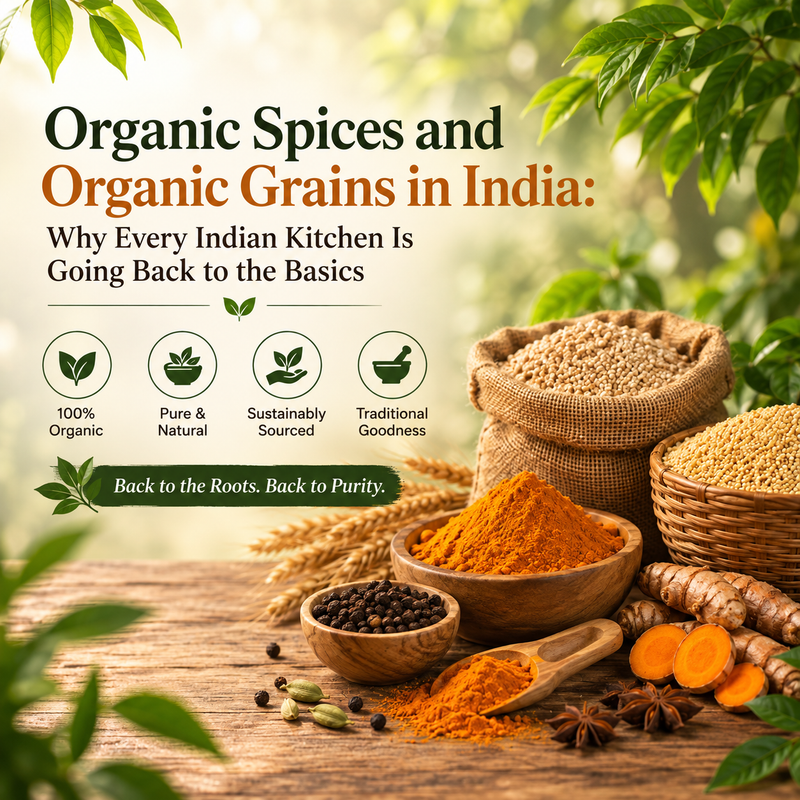
Inside the growing shift toward chemical-free spices and grains — and how to actually tell an organic product from a marketing label.
Open any kitchen shelf in urban India today and you're likely to spot at least one jar labelled "organic" — turmeric, cardamom, rice or lentils that once came from the neighbourhood kirana store now increasingly come from brands promising chemical-free, traceable sourcing. Search interest in organic spices in India and organic grains in India has grown steadily over the past few years, reflecting a broader shift in how Indian households think about their everyday food. This isn't just a passing wellness fad; it's tied to real concerns about pesticide residues, soil health and food traceability that have been building for years. In this article, we'll look at why organic spices and grains are trending, what actually makes a product genuinely organic, and how to buy smart in a market where the word "organic" is used more freely than it should be.
Why Organic Spices and Grains Are Trending in India Right Now
A few clear forces are pushing organic spices and grains from a niche health-food aisle into mainstream Indian kitchens:
1. Rising Awareness of Pesticide Residue
Reports on pesticide residues in commonly consumed spices and grains have received wide media coverage in recent years, making more households cautious about where their everyday staples come from. This has directly fed the search demand for organic spices in India as a perceived safer alternative.
2. India's Growing Organic Farming Movement
States like Sikkim, Madhya Pradesh and parts of the Northeast have significantly expanded certified organic farmland over the past decade, giving brands better access to genuinely organic-certified spices and grains rather than relying on imported or loosely regulated sources.
3. The Global Export Boom in Indian Organic Produce
India has become one of the world's leading exporters of organic products, and this export-driven quality focus has had a knock-on effect domestically — the same rigorous sourcing and certification standards used for export markets are increasingly available to Indian consumers too.
4. A Broader Return to Traditional, Whole-Food Eating
Just as ayurvedic wellness and clean-label beauty have seen a resurgence, Indian food culture is seeing a parallel shift back toward whole, minimally processed staples — organic grains like black rice and traditional millets, and whole, unadulterated spices instead of pre-mixed powders.
5. Single-Origin and Traceable Sourcing Going Mainstream
Much like specialty coffee popularised the idea of knowing exactly where your beans came from, Indian consumers are increasingly drawn to spices and grains with clear origin stories — turmeric from a specific belt known for high curcumin content, or cardamom grown in a particular hill region — rather than generic, unmarked packaging.
What Actually Makes a Spice or Grain "Organic"?
In India, a product can only legally carry an "organic" claim if it's certified under either the National Programme for Organic Production (NPOP) or India Organic / Jaivik Bharat certification, both of which require the crop to be grown without synthetic pesticides, chemical fertilisers or genetically modified seeds, and to go through a documented conversion period on the farm. This is different from vague marketing terms like "natural" or "pure," which have no regulated definition and can be used on virtually any product. A genuinely organic spice or grain will typically carry a certification mark and a traceable batch or origin code, not just the word "organic" printed on the label.
Popular Organic Spices in India Right Now
Turmeric
Organic turmeric remains one of the most searched and purchased organic spices in India, valued for its curcumin content and versatility in both cooking and wellness use. Region-specific varieties, such as turmeric grown in Lakadong, Meghalaya, are especially sought after for their naturally higher curcumin levels compared to standard commercial turmeric.
Cardamom and Clove
Kerala's hill plantations remain the benchmark for high-quality cardamom and clove in India, and organic, handpicked batches from this region are increasingly preferred over mass-produced, chemically treated alternatives, especially for use in traditional cooking and ayurvedic preparations.
Black Pepper and Whole Spice Blends
As more home cooks move away from pre-ground, adulterated spice powders, whole organic spices that can be freshly ground at home — pepper, cumin, coriander — are seeing renewed demand for both flavour and purity reasons.
Popular Organic Grains in India Right Now
Black Rice
Once a regional specialty, black rice — sometimes called "forbidden rice" — has become one of the most searched organic grains in India, prized for its distinctive dark bran layer and antioxidant content, along with its versatility in both traditional and modern recipes.
Traditional Millets
Government-backed initiatives around the International Year of Millets brought renewed national attention to ragi, jowar and bajra, and organic versions of these traditional grains have seen a steady rise in demand as people look for climate-resilient, nutrient-dense alternatives to polished white rice.
Whole Pulses and Lentils
Organic dals and pulses, grown without chemical fertilisers, are increasingly preferred by health-conscious households, particularly as awareness grows around soil health and the long-term impact of chemically intensive farming on nutrient density.
Organic vs. "Natural": Don't Get Confused by Labels
One of the most common mistakes shoppers make is assuming "natural," "chemical-free" or "pure" on a package means the same thing as "organic." These terms are not regulated in the same way and can be used by any brand without third-party verification. Genuine organic spices and grains will carry a recognised certification logo (such as India Organic or NPOP) along with a certification or batch number that can typically be verified online. If a product only uses the word "organic" in its marketing copy without any visible certification, it's worth treating that claim with some scepticism.
How to Buy Organic Spices and Grains Smartly
- Check for certification marks: Look specifically for India Organic, NPOP or Jaivik Bharat logos, not just the word "organic" on the packaging.
- Prefer single-origin, traceable sourcing: Brands that specify the exact region a spice or grain comes from tend to have tighter quality control across the supply chain.
- Buy whole, not pre-ground, where possible: Whole spices are harder to adulterate and retain their potency longer than pre-ground powders.
- Check packaging dates: Organic spices and grains don't contain preservatives, so freshness and proper storage matter more than with conventional products.
- Be cautious of unusually low prices: Genuine organic certification and sourcing come with real costs, so a price that seems too low for an "organic" label is worth questioning.
Frequently Asked Questions
Are organic spices and grains actually healthier than conventional ones?
Organic spices and grains are grown without synthetic pesticides and chemical fertilisers, which many people prefer for reducing pesticide residue exposure. Research on broader nutritional differences is still evolving, but the reduced chemical exposure and often more traditional farming and processing methods are the primary reasons most buyers choose organic.
Why are organic spices and grains more expensive than regular ones?
Certified organic farming typically involves lower crop yields, more labour-intensive practices, and the cost of certification and traceability, all of which add to the price compared to conventionally farmed produce.
How can I verify if a spice or grain is genuinely certified organic?
Look for a recognised certification logo such as India Organic or NPOP on the packaging, along with a certification number, which can often be cross-checked on the certifying body's website. Packaging that only says "organic" in marketing text without any certification mark should be treated with caution.
Do organic grains like black rice need to be cooked differently than regular rice?
Black rice generally has a firmer texture and a longer cooking time than regular white rice, and often benefits from a short soak before cooking to soften the bran layer. Otherwise, it can be used in most recipes that call for rice, from everyday meals to desserts.
Is organic turmeric more effective for health use than regular turmeric?
Effectiveness is generally tied more to curcumin content, which varies by region and variety, than to organic certification alone. However, organic turmeric offers the added benefit of being grown without synthetic pesticide residue, which many buyers factor into their choice alongside curcumin content.
Storing Organic Spices and Grains the Right Way
Because organic spices and grains skip synthetic preservatives, proper storage matters more than it does with conventional products. Whole spices like cardamom and clove hold their aroma and potency far longer than pre-ground powders, especially when kept in airtight glass containers away from direct sunlight and heat — a hot, humid kitchen shelf near the stove is one of the fastest ways to degrade both flavour and any active compounds like curcumin. Organic grains such as black rice and millets should be stored in sealed containers to prevent moisture absorption and pest infestation, and it's worth buying them in quantities that will be used within a few months rather than stocking up in bulk, since freshness genuinely affects both taste and nutritional value over time. A simple habit of buying smaller batches more frequently, rather than large stockpiles, tends to serve organic pantry staples far better than the bulk-buying approach many households default to with conventional groceries.
Bringing It All Together
The growing demand for organic spices in India and organic grains in India reflects a genuine shift in how Indian households are thinking about everyday food — moving away from anonymous, chemically treated staples toward traceable, single-origin ingredients grown the way they traditionally were. Whether it's switching to certified organic turmeric, choosing handpicked Kerala cardamom, or bringing black rice and traditional millets back into weekly meals, this trend is less about following a fad and more about a return to the basics of what food used to be — grown carefully, sourced transparently, and free of unnecessary chemical intervention. As certification and traceability continue to improve across India's organic supply chain, this shift from the kitchen shelf back to the farm looks set to keep growing.