
Ayurvedic Hair Care Products: Why India Is Going Back to Its Herbal Roots in 2026
September 07, 2026 · Havmi Wellness
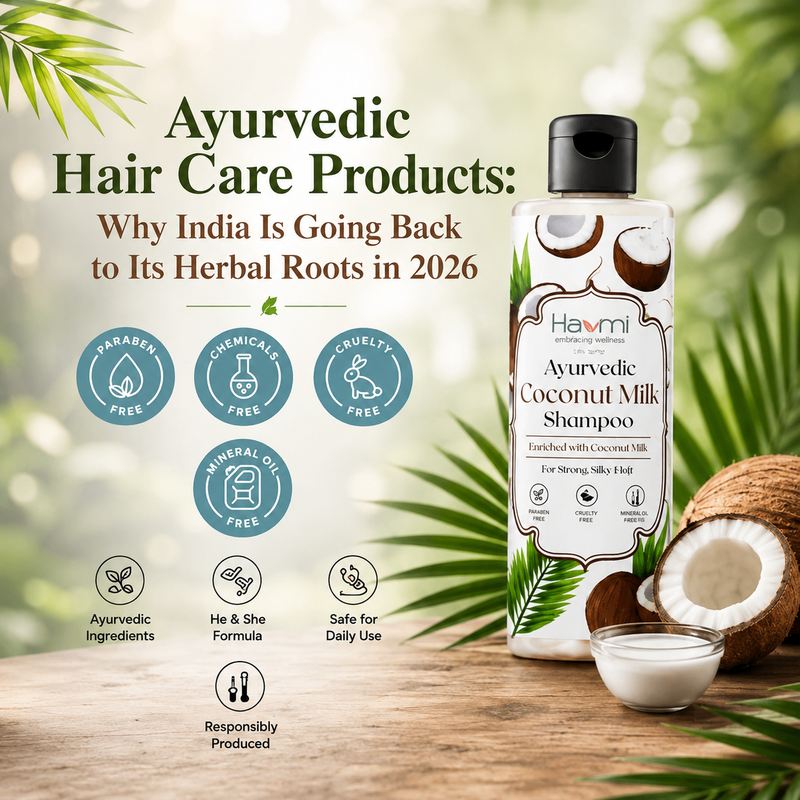
Inside the shift from silicone-heavy shampoos to herbal, natural hair care — and how to actually choose products that work.
Scroll through any wellness or beauty feed in 2026 and you'll notice a pattern: hibiscus, coconut milk, bhringraj and amla are showing up far more often than the silicone-and-sulphate formulas that dominated shelves a decade ago. Hair care products in India are going through a quiet but significant shift, with more shoppers actively searching for ayurvedic hair care products and natural hair care products instead of picking whatever shampoo happens to be on sale. Hair fall, premature greying, dandruff and dull, chemically-stressed strands are some of the most searched hair concerns today, and increasingly, the answer people are reaching for is herbal rather than synthetic. In this article, we'll look at why this shift is happening, what actually makes a hair care product genuinely herbal, and how to build a routine that works for Indian hair and climate.
Why Herbal Hair Care Is Trending Right Now
A few clear forces are driving this shift toward ayurvedic and herbal hair care products:
1. Growing Distrust of Sulphates and Silicones
Sulphates strip natural oils from the scalp, and silicones coat the hair shaft to create artificial shine while quietly causing product build-up over time. As more people understand what's actually in their shampoo, herbal hair care products — typically free of these harsh additives — have become the preferred alternative.
2. Rising Hair Fall Linked to Pollution, Stress and Hard Water
Urban India's combination of pollution, hard water and high-stress lifestyles has made hair fall one of the most searched personal care concerns in the country. This has pushed people toward ayurvedic hair care products formulated with herbs traditionally associated with scalp strength, like bhringraj, hibiscus and fenugreek.
3. The "Slow Beauty" and Clean Label Movement
Just as clean eating reshaped how people think about food, a parallel "clean beauty" movement has taken hold in hair and skin care. Shoppers are reading ingredient labels more closely and gravitating toward short, recognisable ingredient lists over long chemical names — a space where natural hair care products naturally have the advantage.
4. Social Media Bringing Back Traditional Rituals
Oiling rituals, rice water rinses and herbal hair masks that were once passed down informally through families are now widely shared and validated online, giving traditional Ayurvedic hair care a mainstream, almost viral second life.
5. Climate-Specific Hair Concerns
India's mix of humidity, heat and hard water creates hair concerns that many international, chemical-heavy formulas aren't designed for. Herbal hair care products, developed with these specific conditions in mind, are increasingly seen as better suited to Indian hair textures and scalp needs.
What Actually Makes a Hair Product "Ayurvedic" or "Herbal"?
Not every product labelled "herbal" on the shelf lives up to the claim. A genuinely ayurvedic hair care product is formulated around recognisable botanical ingredients — think hibiscus, coconut, bhringraj, amla, neem or shikakai — rather than simply adding a small amount of herbal extract to an otherwise conventional chemical base. True natural hair care products also tend to avoid parabens, sulphates, synthetic fragrances and silicones altogether, relying instead on the herbs themselves, along with natural oils, to cleanse, nourish and condition.
Sourcing plays a role here too. Coconut grown and processed in Kerala, for instance, is often considered a benchmark for quality in ayurvedic hair oils and shampoos, given the region's long-standing expertise in coconut cultivation and traditional Ayurvedic hair care practices.
Popular Categories of Hair Care Products in India Right Now
Herbal Shampoos
Coconut milk and hibiscus-based shampoos are among the most searched herbal hair care products in India today, valued for cleansing hair gently without stripping natural moisture. Coconut milk shampoos are typically associated with deep hydration, while hibiscus formulations are traditionally linked to stronger roots and reduced hair fall.
Ayurvedic Hair Oils
The weekly hair oiling ritual remains a cornerstone of Indian hair care, and herbal hair oils — often blended with multiple ayurvedic herbs — continue to be one of the most trusted natural hair care products for scalp nourishment, split-end prevention and overall hair strength.
Herbal Hair Masks and Packs
Once a monthly salon habit, DIY and pre-formulated herbal hair masks using ingredients like hibiscus, amla and fenugreek have become a popular at-home ritual, especially among people looking to reduce frizz and add shine without heat styling or chemical treatments.
Scalp Serums and Tonics
A newer but fast-growing category, ayurvedic scalp serums are being positioned as targeted treatments for thinning hair and scalp health, borrowing the "serum culture" popularised by skincare and applying it to the scalp.
Building a Simple Ayurvedic Hair Care Routine
You don't need a ten-step routine to see results from natural hair care products. A simple, consistent structure tends to work best:
- Oil weekly: Warm a herbal hair oil slightly and massage it into the scalp at least once a week, leaving it on for a few hours or overnight before washing.
- Cleanse gently: Use a sulphate-free herbal shampoo two to three times a week rather than daily, to avoid over-stripping natural oils.
- Condition naturally: Follow up with a lightweight, herbal conditioner or a diluted hibiscus or amla rinse to keep hair manageable without silicone build-up.
- Mask occasionally: Use a herbal hair mask every one to two weeks for deeper nourishment, especially during dry winter months or after heat styling.
- Protect from the sun and pollution: Tie hair up or cover it when out in strong sun or heavy traffic pollution, since environmental stress is one of the biggest contributors to dullness and breakage.
Ayurvedic Hair Care vs. Chemical Hair Care: What's the Real Difference?
Chemical-heavy shampoos and serums are often formulated for immediate, visible results — instant shine, quick-fix smoothness — using silicones and synthetic conditioning agents that coat the hair rather than genuinely improving its condition. Ayurvedic hair care products work differently: results build gradually as the scalp and hair respond to consistent nourishment from herbs and natural oils, rather than a one-time coating effect. This is why people switching from chemical to herbal hair care often need a short adjustment period — sometimes a few weeks — before hair feels noticeably healthier, since the product is genuinely repairing and strengthening rather than temporarily masking the problem.
How to Choose Genuine Herbal Hair Care Products
With the herbal hair care market growing quickly, here's what to check before buying:
- Ingredient transparency: A real ayurvedic hair care product will name its herbs specifically rather than hiding behind "herbal blend."
- No sulphates, parabens or added silicones: These should be absent, not just reduced, in a genuinely natural formulation.
- Appropriate texture: Herbal shampoos often lather less than sulphate-based ones — this is normal and not a sign of poor cleansing.
- Source and origin claims: Region-specific sourcing, like Kerala coconut or Rajasthan hibiscus, is often a sign of a brand that takes ingredient quality seriously.
- Real reviews over marketing claims: Repeat purchase patterns and genuine customer feedback tend to be more reliable than packaging claims alone.
Frequently Asked Questions
Which is better: ayurvedic hair care products or chemical-based ones?
For most people looking at long-term scalp and hair health, ayurvedic hair care products tend to be gentler and better suited to regular, sustained use, since they avoid sulphates and silicones that can cause build-up over time. Chemical formulas may offer faster cosmetic results but don't necessarily support long-term hair health in the same way.
Can herbal hair care products actually reduce hair fall?
Ingredients like bhringraj, hibiscus and fenugreek are traditionally associated with stronger roots and reduced hair fall, and consistent use alongside a healthy diet and stress management can support visibly stronger hair. That said, significant or sudden hair loss should also be checked by a doctor, as it can have underlying causes that topical products alone can't address.
Are natural hair care products suitable for coloured or chemically treated hair?
Yes, in fact herbal hair care products are often recommended for coloured or chemically treated hair, since they avoid further stripping the hair with sulphates and instead focus on gentle cleansing and nourishment.
How often should I oil my hair using ayurvedic oils?
Once or twice a week is generally sufficient for most hair types. Oilier scalps may prefer once a week with a lighter oil, while drier hair can benefit from more frequent application or leaving the oil in overnight.
Why do herbal shampoos lather less than regular shampoos?
Lather comes primarily from sulphates, which herbal and natural hair care products intentionally avoid. Less lather doesn't mean less effective cleansing — it simply means the shampoo isn't relying on harsh foaming agents to do the work.
Bringing It All Together
The renewed interest in ayurvedic hair care products isn't just nostalgia for grandmother's remedies — it reflects a genuine reassessment of what actually works for hair care products in India's specific climate and water conditions. As more people move away from silicone-heavy, sulphate-based formulas toward herbal hair oils, shampoos and masks, the results tend to be slower to show but longer-lasting and gentler on the scalp over time. Whether it's a weekly oiling ritual, a switch to a sulphate-free herbal shampoo, or an occasional hibiscus hair mask, small and consistent changes rooted in Ayurveda are proving to be one of the most sustainable ways to care for hair in the years ahead.