
Ayurvedic Pain Relief Oil: The Natural Way to Manage Muscle and Joint Pain in 2026
September 09, 2026 · Havmi Wellness
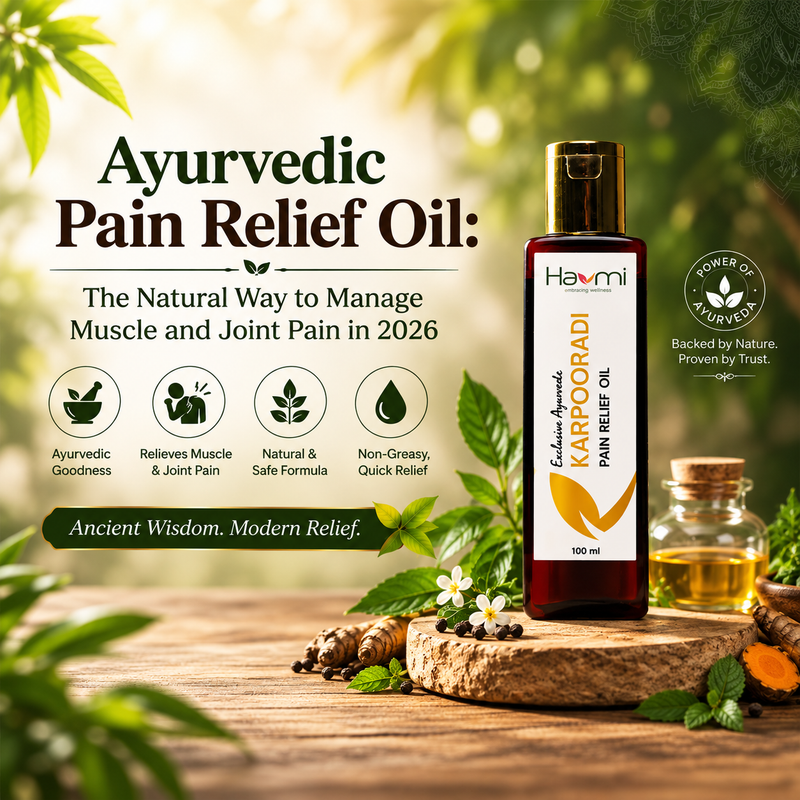
Why herbal pain relief oils are replacing painkillers and sprays in more households every year - and how to use them the right way.
Sore shoulders from a laptop-heavy workday, stiff knees after a weekend hike, a nagging lower back that never quite loosens up — modern life creates more everyday aches than most people realise. And increasingly, the first reach isn't for a tablet or a spray, it's for an ayurvedic pain relief oil. Search trends across India and globally show a steady rise in interest around herbal pain relief oil and muscle pain relief oil, as people look for something that works without the side effects, drowsiness or long-term risks associated with frequent painkiller use. This shift is part of a bigger wellness movement — one that favours natural, topical, ritual-based care over quick chemical fixes. In this article, we'll look at why ayurvedic pain relief oils are trending, how they actually work, and how to choose and use one effectively.
Why Pain Relief Is Trending Toward Natural Solutions
A few clear shifts are driving people toward herbal pain relief oil instead of their usual painkiller or spray:
1. Rising Awareness Around Overuse of Painkillers
Health authorities and doctors have been vocal about the risks of regularly relying on oral painkillers for chronic aches — from stomach irritation to long-term liver and kidney strain. This has pushed people to look for topical alternatives that can be used daily without those concerns.
2. The Work-From-Home and Screen-Time Pain Boom
Longer hours at desks, poor posture and reduced movement have made neck, shoulder and lower back pain some of the most common complaints of the decade. Ayurvedic pain relief oil, massaged into these areas, has become a go-to evening ritual for people managing this kind of chronic, low-grade tension.
3. The Fitness and Recovery Boom
As more people take up running, strength training and weekend sports, muscle pain relief oil has found a new audience — gym-goers using it for post-workout recovery and to ease delayed-onset muscle soreness, much like athletes have traditionally used herbal oils after physical exertion.
4. A Broader Return to Ayurvedic and Herbal Living
Just as ayurvedic hair oils and turmeric have seen a resurgence, pain relief is following the same pattern — people are actively seeking out short-ingredient, plant-based formulations over products loaded with synthetic numbing agents or artificial fragrances.
How Does an Ayurvedic Pain Relief Oil Actually Work?
Unlike an oral painkiller, which works internally to block pain signals throughout the body, a herbal pain relief oil works locally, right where it's applied, through two combined mechanisms:
- Herbal action: Traditional ayurvedic pain oils are infused with warming herbs and botanical extracts known for their anti-inflammatory and analgesic properties, which are slowly absorbed through the skin into the underlying tissue.
- Massage and circulation: The act of massaging the oil into sore muscles or joints increases local blood flow, helps relax tight muscle fibres, and supports the body's own recovery process — an effect that a pill or spray simply can't replicate.
This combination is why many people find that a good ayurvedic pain relief oil offers relief that feels more "complete" than a spray — it's not just masking the pain, it's actively working on the area through warmth, herbs and touch.
Common Uses for Herbal and Muscle Pain Relief Oils
Everyday Joint Discomfort
For knees, elbows and shoulders that feel stiff first thing in the morning or after long periods of sitting, a warm oil massage before bed or after a shower can noticeably ease stiffness over time when used consistently.
Post-Workout Muscle Soreness
Muscle pain relief oil is especially popular among people who exercise regularly. Applying it to worked muscles after a gym session or run can help ease the tightness and soreness that typically peaks a day or two after exertion.
Lower Back and Neck Tension
For desk workers and anyone dealing with posture-related pain, a herbal pain relief oil massaged into the neck and lower back at the end of the day can help release built-up tension that tends to accumulate from long hours in one position.
Seasonal and Weather-Related Aches
Many people notice their joints feel stiffer during colder months or sudden weather changes. Ayurveda has long recognised this pattern, and warming pain oils are traditionally used more frequently during these seasonal transitions.
Recovery After Physical Strain
From a long day of manual work to travel-related stiffness, herbal pain relief oil is a simple, no-fuss way to support the body's natural recovery whenever it's been pushed harder than usual.
How to Use an Ayurvedic Pain Relief Oil Correctly
Getting the technique right makes a real difference to how effective a pain oil feels:
- Warm the oil slightly: A gently warmed oil absorbs faster and feels more soothing than a cold application, especially for joint pain.
- Massage in circular motions: Work the oil into the skin using firm, circular strokes rather than just rubbing it on the surface — this helps with both absorption and circulation.
- Focus on the surrounding area, not just the pain point: Massaging the muscles around a sore joint, not only the joint itself, often brings more relief.
- Give it time to absorb: Avoid washing the area or covering it tightly right after application; let the oil sit for at least 20–30 minutes for full benefit.
- Use consistently, not just reactively: For chronic stiffness, a nightly or every-other-day routine tends to work better than only reaching for the oil when pain flares up.
Ayurvedic Pain Oil vs. Pain Sprays and Gels: What's the Difference?
Pain sprays and gels often rely on cooling or numbing agents that create an immediate but short-lived sensation, masking pain rather than addressing the underlying muscle tension. An ayurvedic pain relief oil, by contrast, is designed to be massaged in, which means the benefit comes from both the herbal ingredients and the physical act of massage — making it slower to apply, but often longer-lasting in effect. Sprays are convenient for a quick fix at a desk; oils are better suited to a proper end-of-day or post-workout ritual where you have a few minutes to actually work the product in.
How to Choose a Genuine Herbal Pain Relief Oil
With so many pain oils on the market, here's what separates an authentic, effective one from a diluted or synthetic imitation:
- Recognisable herbal ingredients: Look for named herbs and oils rather than vague terms like "herbal extract blend."
- No synthetic numbing agents: Genuine ayurvedic pain oils rely on herbs for warmth and relief, not menthol-heavy synthetic cooling agents alone.
- Appropriate viscosity and absorption: A good pain oil should absorb into the skin with massage, not sit on the surface feeling greasy.
- Transparent sourcing: Brands that mention where their herbs and base oils are sourced from tend to have tighter quality control.
- Consistent real-user feedback: Repeat purchases and genuine reviews are a better indicator of effectiveness than marketing claims alone.
Frequently Asked Questions
Is ayurvedic pain relief oil safe to use every day?
Yes, most herbal pain relief oils are formulated for regular use as part of a daily or nightly routine, unlike oral painkillers which are generally not recommended for long-term daily use. As always, discontinue use and consult a doctor if you notice any skin irritation.
How long does it take for a muscle pain relief oil to work?
Many people feel some relief from the warmth and massage almost immediately, while the deeper anti-inflammatory benefits of the herbs typically build up with consistent use over several days to a couple of weeks.
Can I use pain relief oil for chronic joint pain, or only for muscle soreness?
Ayurvedic pain oils are commonly used for both — muscle soreness from exertion as well as ongoing joint stiffness — though for chronic or worsening joint pain, it's important to also consult a doctor to rule out any underlying condition.
Should I apply the oil before or after a workout?
Both have benefits: applying before a workout can help warm up muscles and improve flexibility, while applying after helps ease soreness and support recovery. Many people do a light application before exercise and a fuller massage afterward.
Building Pain Relief Into a Long-Term Wellness Routine
One of the biggest mindset shifts happening around pain management right now is moving away from treating oil, sprays or tablets as one-off fixes for flare-ups, and instead building them into an ongoing self-care routine — the same way people now think about skincare or fitness. An ayurvedic pain relief oil fits naturally into this pattern: a two-minute massage after a shower, a wind-down ritual before bed, or a five-minute cooldown habit after exercise. Over weeks, this consistency tends to matter more than the strength of any single application, since the herbs work cumulatively and the massage itself gradually helps release chronic tension patterns that build up in muscles and joints. Pairing a herbal pain relief oil with basic movement — light stretching, short walks, or simple mobility exercises — tends to compound the benefit further, since stagnant, unused muscles are typically more prone to stiffness in the first place.
Bringing It All Together
The growing preference for ayurvedic pain relief oil over conventional painkillers and sprays isn't just a passing wellness trend — it reflects a genuine shift toward natural, ritual-based pain management that treats the body gently rather than masking symptoms. Whether you're dealing with everyday desk-related stiffness, post-workout muscle soreness, or seasonal joint discomfort, a good herbal pain relief oil, used consistently and massaged in properly, can become one of the simplest and most effective additions to a natural wellness routine. As more people move away from quick fixes and toward sustainable self-care, muscle pain relief oil is well on its way to becoming a everyday essential rather than an occasional remedy.